2026 Audi Q7 : The 2026 Audi Q7 continues to carve its niche in the U.S. luxury‑SUV market as a refined, tech‑heavy three‑row that balances everyday comfort with a subtle sporting edge.
With updated packages, sharpened styling cues, and a strong focus on driver assistance and connectivity, this year’s Q7 feels less like a stopgap and more like a deliberate refinement of Audi’s flagship family hauler.
For American buyers who want European sophistication without sacrificing practicality, the 2026 Q7 remains a compelling alternative to rivals such as the BMW X5, Mercedes‑GLE, and Cadillac XT6.
Design and Presence on American Roads
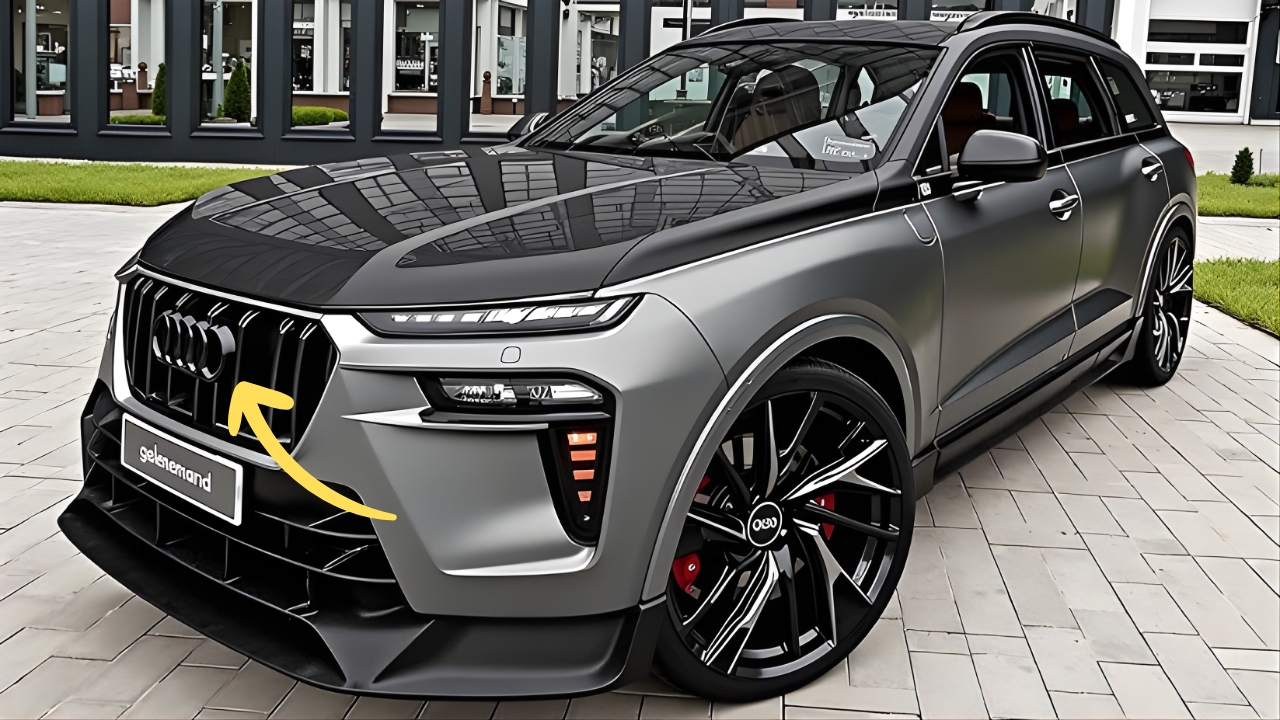
Exterior styling for the 2026 Q7 leans into Audi’s latest single‑frame grille language, giving it a wider, more planted stance that reads well on wide U.S. highways and suburban driveways alike.
Standard LED lighting is joined by optional HD Matrix‑design LED headlights with laser light, which Audi markets as a Vision package that boosts nighttime visibility and gives the SUV a distinctive face in city traffic and rural blacktop.
Wheel options now stretch up to 22‑inch designs on higher trims, including new 5‑double‑spoke and 5‑arm‑edge patterns that underline the Q7’s premium positioning without looking over‑styled.
Inside, the cabin stays true to Audi’s minimalist, driver‑focused layout, with layered horizontal lines and high‑quality soft‑touch surfaces that feel at home in both daily commutes and cross‑country trips.
The available Luxury package adds extended leather treatment on the dashboard, armrests, and upper doorsills, along with a Dinamica® headliner that gives the cabin a more upscale, lounge‑like ambiance.
With three rows of seating and a power tailgate that can be opened hands‑free, the 2026 Q7 positions itself as a genuine seven‑seater for American families who need both passenger space and cargo flexibility.’
Powertrains and Driving Dynamics
For the U.S. market, the 2026 Audi Q7 offers two turbocharged engine choices: a 2.0‑liter four‑cylinder in the Q7 45 TFSI and a 3.0‑liter V6 in the Q7 55 TFSI, both paired with an 8‑speed Tiptronic automatic and standard quattro all‑wheel drive.
The four‑cylinder delivers around 261 horsepower, which is sufficient for relaxed highway cruising and light towing, while the V6 bumps output to roughly 335 horsepower, giving the Q7 noticeably quicker acceleration and more confidence when passing on two‑lane roads.
Adaptive air suspension is now standard on the Premium Plus trim and available on higher variants, allowing the Q7 to switch between a softer, more comfortable ride and a firmer, more composed setup when the road turns twisty.
New for 2026, the Sport plus package on the Q7 55 TFSI adds S line exterior elements, sport‑adaptive air suspension, and carbon‑twill matte inlays, sharpening the SUV’s character without turning it into a full‑on performance machine.
Fuel‑economy estimates remain in the low‑20s for the four‑cylinder and high‑teens for the V6, which is competitive within the segment even if it doesn’t match the most efficient crossovers.
Tech, Infotainment, and Connectivity
At the heart of the 2026 Q7’s interior is Audi’s MMI Touch Response dual‑display setup, which replaces traditional physical buttons with a layered touchscreen interface for climate, audio, and vehicle settings.
The upper screen handles navigation and media, while the lower display manages HVAC and secondary functions, giving the center stack a clean, uncluttered look that many American buyers now expect in premium SUVs.
Wireless Apple CarPlay and Android Auto are standard, along with wireless charging and an Audi smartphone interface that keeps phones integrated without cable clutter.
Audi Virtual Cockpit Plus remains a highlight, offering a fully digital instrument cluster that can be customized to show navigation maps, trip data, and driver‑assistance information right in front of the driver.
Higher trims add a head‑up display that projects key speed and navigation cues onto the windshield, which is particularly useful on long interstate runs.
The Bang & Olufsen 3D Advanced Sound System is available on Prestige‑level models, delivering concert‑hall‑like audio that complements the Q7’s quiet cabin and makes road‑trip playlists and podcasts feel more immersive.
Safety and Driver‑Assistance Features
Safety is a major selling point for the 2026 Q7, with Audi making several advanced driver‑assistance systems standard across the range.
Adaptive cruise control, lane‑keeping assist, and rear cross‑traffic alert are now baseline on most trims, while higher‑end packages add features such as night‑vision assist, intersection assist, and top‑view camera systems that make parking and low‑speed maneuvering easier in crowded lots and tight garages.
Traffic‑sign recognition is now standard on all Q7 and SQ7 models in the U.S., helping drivers stay aware of speed‑limit changes and other regulatory signs on unfamiliar roads.
The combination of quattro all‑wheel drive, strong braking, and a suite of electronic aids makes the 2026 Q7 feel reassuringly stable in rain, snow, and on winding mountain passes.
For families, the availability of night‑vision assist and intersection‑monitoring systems adds an extra layer of confidence when driving late at night or through busy urban intersections.
Also Read This : 2026 Subaru Forester Unvealed Smart tech features, look is elegant
2026 Audi Q7 Positioning in the U.S. Market and Conclusion
In the crowded American luxury‑SUV segment, the 2026 Audi Q7 carves out a clear identity as a sophisticated, tech‑forward three‑row that doesn’t sacrifice driving enjoyment for practicality.
With updated styling, new packages like Sport plus and Vision, and a strong emphasis on connectivity and safety, it appeals to buyers who want European engineering wrapped in a spacious, family‑friendly package.
While Audi is preparing a fully redesigned Q7 for late 2026, this current‑cycle 2026 model still holds its ground as a polished, well‑rounded option for U.S. consumers who value refinement, space, and everyday usability over outright sportiness.